
Saturday night was the debut of the new Aeroscreen. The safety device that’s going to change the future of the sport also changes the way that these drivers race. Think about it, last year and before, these drivers were used to racing with the open air hitting them. Now, they have a canopy-like windscreen that is anchored by a titanium framework that encompasses the cockpit.
After the one-day show, the season opener on Saturday, all the unanswered questions on how this new device will work were answered.
“Other than the handling differences, I didn’t notice the screen, to be quite honest with you,” said defending series champion Josef Newgarden. “You can take that as a very good thing. I didn’t notice it.
“It’s there now. I mean, it felt like a normal INDYCAR race to me. I didn’t notice a big difference to last year. The handling is different in the car, but as far as the driver’s experience, I don’t even know the thing any more. It’s crazy how good of a job they’ve done with the ducting. The visibility was fine. I had zero issues with it from that standpoint.
“Very different animal to drive. Mechanically you had to work with it a lot.”
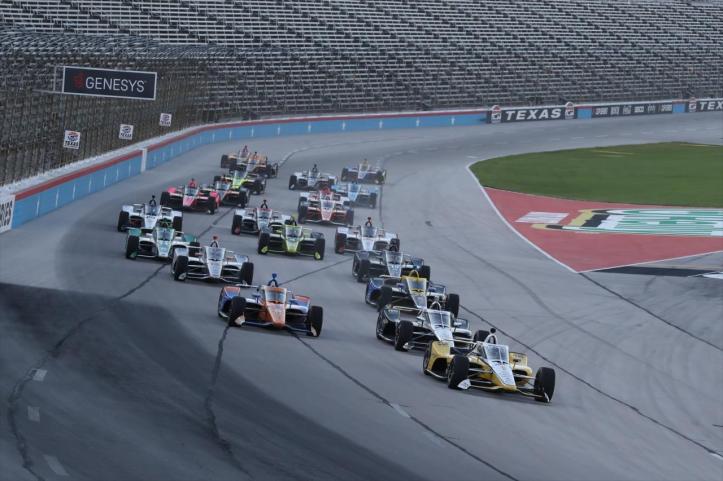
Ryan Hunter-Reay agreed and said that while it’s awkward, it’s fairly easy to get used to.
“All the drivers are slowly but surely getting used to it,” said the Andretti Autosport driver. “On a high-speed oval, you know you’re missing something. It’s awkward. The first four or five laps, it’s strange. Your whole career you’ve been dealing with that 220 miles an hour whatever it is, headwind into your helmet. It’s different.
“But you get used to it, adjust. The cooling is good. I think everybody at INDYCAR did a great job on this thing. All good so far.”
Only a handful of drivers had a chance to test the Aeroscreen on an oval before this weekend. None of them have been in the car with this device at sunset and even night time conditions. None of them have been in it with this type of heat. All of this was new.
Plus, the ballistic screen made by PPG weight 17.3 pounds, the titanium frame another 27.8 pounds. That adds around 45 pounds of extra weight to front of the car which in turn can change all the setups.
“Yeah, definitely,” Newgarden said if the new device altered their setups from the past. “Temperature-wise the tires are reacting differently with the weight, not just having more weight but having the weight forward. It’s actually a very big shift for the tires.
“I think controlling the temperatures, trying to keep the balance in check in traffic, is going to be probably the biggest difference for us compared to last year. I think that’s where we’ve had the least experience. It will be tough.
“But it’s different. It require as different setup, requires you to take care of the tires. Yes, the answer to your question is different setups.”
Hunter-Reay agreed again.
“It’s basically different everywhere we go. There’s a bit of an offset and you adjust to that. It’s not miles off. The drivers really just have to I think at times adjust their driving style to it.”
Runner-up finisher Simon Pagenaud said that the handling was off for him too, but nothing that they can’t overcome. It will be an adjustment but they have the best in the business to adapt to it too.
“The car changed dramatically,” said last year’s Indy 500 champion. “We’re going to have to adjust. Obviously today one day wasn’t very easy to do that. It was good to have a whole race and be able to figure out what we need to do for the future going forward.
“But same as Josef, you just feel it’s safe. You feel like if anything happens, your face is protected. That’s awesome. That’s awesome to see that INDYCAR has made such a leap forward in safety. Personally, I’m very thankful that we’re in that era with Josef and the others.
“Obviously, safety is big. We go very high speeds. Things can get safer, it’s pretty awesome. That is a big positive.”
 Race Review Online