
Ryan Newman suffered a traumatic brain injury following a frightening last lap crash in February’s Daytona 500. Newman, wound up only missing three races in wake of that incident, but the main reason that the Roush Fenway Racing driver only missed just that amount of time, was largely due to a lengthy COVID-19 break this past spring.
Now, as NASCAR returns to their first superspeedway race since Daytona, a lot has changed in terms of their racing package on this type of race track.
“Sunday is a big day for both me personally, as well as our race team,” Newman said ahead of Sunday’s GEICO 500 (3 p.m. ET, FOX, MRN). “I don’t think there’s any doubt we’ve shown what we can do at a superspeedway track. We were right there last fall and just missed it, and obviously felt good going into the last lap in Daytona in February. As always, being one of the ones left at the end will be key, and we hope to be one of those come Sunday in the Castrol Ford.”
Newman, has no memory of February’s race and that’s probably for the better. It’s going to be a different race for the 40 drivers that will suit up and race on the 2.66-mile Alabama race track on Sunday in comparison to the last time they were in this package.
The reason for the changes made is all because of Newman’s crash. NASCAR, is good at reacting to situations in matters of safety and when you see a car go through what it did in February, changes needed to be made.
Those changes include:
- Elimination of aero ducts at superspeedway tracks.
- Reduction in size of throttle body from 59/64” to 57/64” (superspeedways only).
- Slip tape must be applied along the entire length of the lower rearward facing surfaces of the rear bumper cover and extension (superspeedways only).
In laymens terms, NASCAR is trying to slow these cars down, reduce the amount of runs you can get on the car in front of you and hope to all but eliminate tandem drafting.
While NASCAR says they can’t prevent wrecks from occurring, they can do their best to improve what the cars and drivers inside of those cars, go through and help them safely walk away from frightening crashes like we saw in Daytona.
“Keep it from happening? I think obviously when we go to superspeedways, as we said, any of our races, what we do is inherently dangerous,” said NASCAR’s Senior Director of Safety and Engineering, John Patalak. “Stopping a wreck from happening, that would be pretty difficult.”
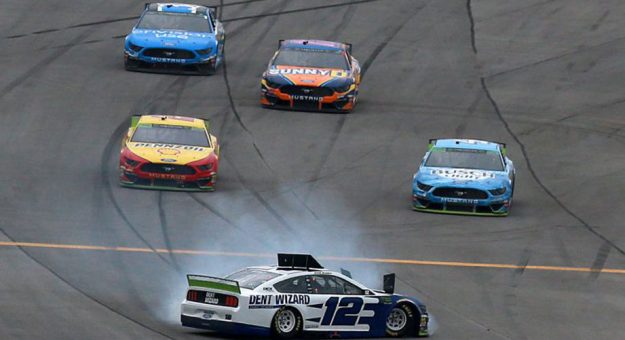
Patalak said that NASCAR had “four bucketlist” items that they needed to do between Daytona and Talladega and feel like they have a good grasp on how to achieve what they’re looking for in keeping drivers safe.
The first step is slowing the cars down themselves. They know when they see speeds get at or above 200 mph, things can get dicey. The Newman incident had a number of factors, but the first was the rate of speed that he was traveling. The way he hit the wall, the speed was so high it made him get airborne. By traveling at a slower rate of speed, the car should stay grounded and hopefully take a different angle after impact.
“I would say that slowing the cars down surely should and would help from an aero liftoff standpoint,” Patalak continued. “I would say our findings from the Ryan Newman crash, his liftoff was not due to an aero event but from him getting into the wall. The idea there is reducing the speeds of the car, slowing them down. We would expect speeds under the 200 mile-an-hour barrier here. So from that standpoint slowing the cars down, keep from having as violent wrecks.
“In general, when we can slow the speeds down, it’s going to be of benefit for the crash itself, for the driver in the car. It will also affect the loads on the vehicle and how the SAFER barrier responds. Directionally it’s the right way to go.
“There were some other things happening with the 6 car as it approached the SAFER barrier. It wasn’t in the banking, but there’s still banking present at that portion of the racetrack.
“As the car moved into the SAFER barrier, there was significant loading to the left side of the vehicle, which was due to the friction as the car was sliding. That started that overturning moment you see in the video as the car leaves the wall.
“Those things put together – speed that it approached the wall, the angle, the friction between the left side of the vehicle, tires, jack post – all those things stack up leading to the series of events we saw occur.”
With reducing the speed comes in reducing horsepower. With reducing horsepower, you reduce the runs you get on cars in front.
“When you look at the goal of slowing the cars down, obviously the restriction from 59 64ths to 57 64th is an expected horsepower loss of somewhere between 35 and 40 horsepower, which general rule of thumb the teams use is 30 horsepower per second. With the 40 horsepower, we’d expect the cars to slow down by over a second compared to what they would have run.”
That was something the drivers have all agreed upon. They don’t like the closing rate being so great like they’ve been when taking off the restrictor plates last season.
“That was something that we talked about with NASCAR,” Blaney said of the runs drivers were getting with the previous package. “The runs were gigantic. We get hooked up, that made your runs even bigger. There’s a fine line. You need the draft to work to where you get runs on cars, but not monstrous drafts where it’s dangerous to kind of block them and things like that. Hopefully we can find a fair in-between.”
Thirdly, and this is a big one, tandem drafting has to go. It’s dangerous and can create even bigger crashes if not addressed quickly.
“Right here, right now, sitting here today, I would say that this should eliminate it,” said Patalak. “I also know they will all be working to try and get back to some form of it. I’ve done this long enough to know that I will not make any bold, blanket statements that would challenge them to prove me wrong.
“I think with the reduction in power, the aero ducts going away, that will make sort of a smaller hole, if you will, that should make it much more difficult to get into that configuration.”
“As far as reducing the likelihood of tandem drafting, the elimination of the aero ducts at the superspeedway tracks were removed to try to mitigate the likelihood that cars could tandem draft. Then also the reduction of the power would likely reduce the likelihood of tandem as well.”
There’s other safety aspects to the car itself in terms of crash impact efficiency that won’t affect the aero package itself, but these three main changes are drastically going to potentially change the racing on Sunday.
The big aspect of this is that there’s not going to be any practice this weekend to test out if the new updates even work. We’ve seen updates made in the past and they in fact go the other direction. For just this race a year ago, NASCAR had to add a wicker bill to slow the cars down as they were going over 205 mph in the draft.
While we’ve not practiced for any of the races since we came out of the COVID-19 break, Talladega was a place I at least expected to see a small session just to test out these new changes.
“I don’t know what the closest year that we ran a package like this would be,” Austin Dillon said. But, we feel like the racing is going to be different from the way it was at Daytona. It always is different from Daytona to Talladega he said.”
The drivers though, well they’re okay with it even with the danger aspect being greater here than anywhere else.
“I’m a big fan of this no practice thing,” Hendrick Motorsports driver Alex Bowman said last Friday. “I’m really enjoying it. I feel like we run about the same and it gives me less time to kind of dial us out for the race.
Points leader Kevin Harvick agreed.
“I think when we get done with all of this and we look at our schedules and we look at our on-track time and we look at the way we qualify and the things we do, you’re going to have to look at it,” Harvick said. “You’re going to have to look at how you function and how you do everything because it’s been a success. It’s very different than anything anybody would have ever thought about, and now you’re forced to try it, and it really hasn’t affected the way the race looks, it hasn’t affected who runs up front.”
The JGR drivers even admitted that the lack of practice time has certainly cost them in terms of the speed department in comparison to last year.
“I think it’s been a little bit tough not having practice and things like that to hit it right,” said Martin Truex Jr. “I think our cars are close. I don’t think we’re dominant. I think there’s some really fast cars out there that we’re trying to catch up to. We really have to do all the little things right to be able to put ourselves in position to win races, and we’ve done that. We’ve been in position a few times this season, and things didn’t go the way we needed them to, and when you’re not a dominant car, you’re not just going to blow by through the field when you have issues. We definitely know we need to get better.”
Truex, says that it’s hard on them to prepare for the races even because in the Coca-Cola 600, they dominated then came back a few days later and struggled to stay in the top 25.
“That’s just where the practice thing comes in,” Truex continued. “You go back to the racetrack with your best guess of what you think is going to work, and it’s not always what you think it’s going to be. You give a great driver and crew chief and engineer and team an hour to work on a race car, they’re going to get it better.”
Two-time defending Daytona 500 champion, Denny Hamlin, says that these guys will all adapt early and know what they have not long after the green flag is dropped on Sunday’s race.
“I’ll know in the first couple laps how big the runs are, what kind of gap I need to have to the person behind me to give me the run forward,” said Hamlin. “I’ll know pretty quick what to do with the package.
“We have probably a pretty good idea of it anyway. These drivers are so good, they’re going to figure it out pretty quick.”
Kyle Busch agreed with that, saying it’s going to be more difficult on the crew guys setting up the car than the drivers racing it.
“I think it would be more of an issue with the engine tuners and knowing whether or not we guessed correct on the gear,” Busch said about if he’s concerned about the lack of practice. “Then, obviously whether they can guess right on the fuel mapping of the engine, stuff like that with it just being different RPM and essentially less horsepower.
“I think it’s going to be something more challenging for them than for us drivers. I don’t think any of us would have any problem with it. Looking forward to getting back in the Interstate Batteries car this weekend and hoping to get us back to victory lane there at Talladega.”
What we do know is, Ford has won eight of the last nine NASCAR Cup Series races at the Talladega Superspeedway. They’ve won with the restrictor plates, with the tapered spacer and with any update given to this package. They should be the ones to watch still on Sunday afternoon.
 Race Review Online