
INDIANAPOLIS — After 10 long weeks of watching nothing but sports replays from the past, all-time games and races to be exact, we’re finally ready to watching a live sporting event. That will come on Sunday when the NASCAR Cup Series resumes their 2020 season at the Darlington Raceway on May 17.
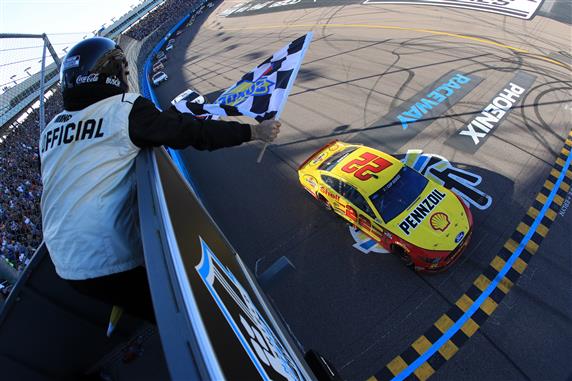
It will mark the first race since March 8 when NASCAR visited the Phoenix Raceway. A span that will have lasted 70 days in total.
By comparison, from the season finale at the Homestead-Miami Speedway last year (Nov. 17) to the opening day of Daytona 500 practice this year (Feb. 8) was 83 days. This COVID-19 break lasted just 13 days fewer.
Three days after the completion of NASCAR’s race in Arizona, the entire landscape of the sporting world changed.
On Wednesday (March 11) of that following week, NBA player Rudy Gobert tested positive for the coronavirus. From that moment on, everything that we knew as “normal” then, well it was thrown out the window and may not return any time soon. The NBA swifty postponed their season that night. All of sporting leagues around the world would follow suit over the next 48 hours, including motorsports.
NASCAR was planning on racing that upcoming weekend at the Atlanta Motor Speedway, with new safety measures in place, but with everything else getting canceled, they didn’t want to be the ones risking the spread of this virus further. So, on Friday March 13, NASCAR said that they would not race in Atlanta. Then came a flurry of postponements of the next several weeks that included moving the next seven races (Homestead, Texas, Bristol, Richmond, Talladega, Dover and Martinsville). Throw in Atlanta and you have eight races needing made up.
But, with coronavirus cases starting to lower, the federal and local run governments were wanting to climb out of these stay-at-home orders. Not only was our health care system taking a large hit, so was our economy at almost every level. People were without jobs because our lives came to a complete stop basically since mid March. Nothing that we did on March 10 can be used now. It was time to come back out of our homes but we have to do so in a “new normal” for a while.
That means a return to racing. Despite that, the races that will be run for the foreseeable future, well they’re going to look vastly different than they did in March.
“Events are going to look different than they have in the past,” said NASCAR vice president of racing operations John Bobo. “The way we travel to the event, the way we enter the event, move about in the event, the way we leave an event is going to be different.”
NASCAR’s new plan is to race seven times in an 11 day span without any fans in the grandstands. They say that they pride themselves in being a fan-friendly sport and that fans drive everything NASCAR does, but the decision to race without fans for these races is focused on the long-term health of the fans and the sport. Without a vaccine available and the potential for spread still being as dangerous now as it was in March, no way will fans be able to be in attendance any time soon.
So with no fans, how can we race? That’s all possible because of the $8.2-billion TV deal in place to help NASCAR, their teams and their race tracks get some cash flow going to keep them moving forward.
So, we have a plan to race without fans and for TV only, but where do we race? NASCAR was deemed essential from North Carolina’s governor last week, so they can get back to work. Several states have expressed interest in hosting NASCAR races without fans, so it was up to NASCAR to figure out the right plan.
That came rather quickly which led to a third change — race in close proximity to base in Charlotte and by doing that, they can show up and race in one day and get back home.
Primarily, NASCAR worked with local governments who have determined it was safe to return to racing in their state. They chose Darlington Raceway and the Charlotte Motor Speedway because the two tracks are within driving distance, so no competitors have to fly and the time spent in these communities is minimized.
“Our goal was to get at least seven or so events under our belt, drivable, learn as we go, not have to put people on planes if we could avoid that,” said Steve O’Donnell, NASCAR executive vice president and chief racing development officer. “Once we get beyond those, I think you’ll see us move in. I keep using the word ‘fluid’, but it is. Once you get beyond those seven events we feel like we’ll be ready to continue to look at races where we may be able to travel.”
Now that we have no fans, TV ready and tracks readily available, there’s still other factors to this equation. Just because there’s not any fans on the grounds, doesn’t mean the amount of people isn’t concerning. Race teams bring a bunch of people to make the cars go fast. They also host guests in terms of sponsors and people like that. So, in order to make it safer, NASCAR has limited each team to only 16 people. They also chose not to have practice or qualifying either. That helps make this a one-day show and eliminate the need for extra people to prep the car and change set ups. You’re going to race what you brought.
Still, if you take Cup in general, you have 36 chartered teams and give them each 16 people. That’s easy math to find out 36×16 = 576 people on the grounds just in terms of race personnel. That doesn’t count the track and series officials, a medical staff, race promoters, maintenance and others. That number quickly jumps over 700 when factoring them in. So, for this to work, you have to separate Cup, Xfinity and Truck teams. In turn, you give them one-day shows on separate days — hence seven races in 11 days.
Also, among those 16 person limits, no family, no sponsor VIPs, nor any PR folks will be there either. Also, the TV broadcast will have just one pit reporter with the entire m broadcast booth being utilized back in Charlotte, not at the track. For other media, only four of us will be allowed — total. No interviews, no pit/garage access, just a press box view and that only. To further this, there will be no victory lane celebrations too.
So, lets recap. We have no fans, TV only, close races in proximity to Charlotte, one-day shows, stand alone races for all three series with no practice or qualifying and a limit of 16 people allowed per car. All big adjustments.
Even with that, how are we going to keep those teams that are there safe? NASCAR has a plan for that too.
“We’re asking teams and all of our participants, organizations, to self-monitor people for five days for symptoms before they arrive,” said Bobo.” We’re asking them to fill out a questionnaire and initial screening for temperature.
“Concerns after that, they will go into secondary screening with medical personnel, which will include heart rate, pulse oxygenation. Medical personnel will make decisions at that point.
“We’ll also go through an additional screening for essential personnel. We’ve been working with the teams on a roster system to make sure the event is limited as to who can attend. If there’s any operations we can move off-site, that’s what we’re trying to do to limit the event.
“Everybody going into the infield is going to be wearing cloth masks as they move about. Since there will be no spectators, no fans in the infield, we’ll be able to use the entire infield to space out and socially distance. We’ll be able to space out the car garages, not just the Cup garage, but the Xfinity and Gander Outdoor garage as well. We’ll have drivers’ motor coaches there, but not in a driver/owner lot. We’re spreading those out to provide a place for drivers to self-isolate during the day.
“Our two big things are social distancing and the other is compartmentalization. With social distancing, we’re going to have one-way walkways for people, our rules strictly enforced. If people aren’t complying with our rules for masks and social distancing, they will be removed from the premises.
“If we have someone in the broadcast lot, they have no business in the garage, they don’t need to come into the garage, and vice versa. We need to keep people out of work areas they might not normally get into.
“On pit road we are mandating all over over-the-wall competitors have at fireproof sock mask that will go from their nose down below their chin, or they have to use the face screen from above their eyes to below their chin.
“We’re going to space out our spotters. Our spotters aren’t necessarily going to be on the roof but across the top of the empty stadium, all six to 10 feet between them. They can play the important role they play in the competition.
“Temperatures will be taken randomly throughout the event of people as needed. Symptomatic patients will be processed and removed from the event and given medical attention if needed. We’ll be doing that outside the infield care center to protect the integrity of the infield care center for emergency operations during the race.
“Post race we’re going to stagger people’s exits. We’ll be looking at temperature and other factors as they leave. We’re also requiring all the teams to disinfect as needed and we’ll even seal haulers and things like that to make sure as they go to the next event they’re safe.
“We set up lines of communication for every participant to reach out to us on lessons learned after the event so we can get better and smarter on each successive race as we go forward.”

What will be the procedure if a driver or a crew member ends up testing positive in the days following a race?
They addressed that too in saying, “I think what we would do in that instance is look at every person that driver interacted with directly. Those folks would probably have to self-isolate. Then we would obviously make sure that the driver is going to get the care he needs. We will be following up with each participant. We’ve asked each organization to do that as well for 14 days for symptoms of anybody that’s attended the event.
“I have to say all of our plans have been reviewed by the local health officials, including in South Carolina, the local healthcare provider there as well, as well as in North Carolina.”
As far as testing on the teams, if there are multiple cases on a team, what will you do to stop the transmission of that? If you have to replace a driver, what would be the procedure for that?
“If people are removed, we are going to replace people. If there are multiple positives, of course we’re obviously going to look at everything that’s gone on around there and investigate, see what we need to do to continue to be safe.
“We hope we don’t have to do this, but we will allow a replacement person for a team member or for a driver. The parameters will be set up in place with the screening prior to the race, especially for Darlington. A worst-case scenario, a three-hour window if we had to replace someone, we’d have that time. As you get beyond that, you look at the what ifs. We’re going to learn as we go.
“If you had multiple teams, that’s certainly a different story than if we were just isolating one person.”
NASCAR also says that the on the road members, shouldn’t go to the team shops now for the foreseeable future either and the members in the team shops shouldn’t travel on the road. That’s to help stop any spread as well.
 Race Review Online
[…] More: NASCAR Safety Plan […]
LikeLike
[…] More: NASCAR Safety Plan For Resumption […]
LikeLike