
INDIANAPOLIS — On this day, exactly six weeks ago, the United States as we know it changed its entire landscape. How we operated in our day-to-day lives prior to that dark Wednesday in March, well it was instantly altered. The “old normal” the one that as we sit here today, 42 days later and reflect upon, it’s clear that we became complacent. Yes, there were the stresses of every day life, but that pales in comparison to what we’ve experienced the last six weeks. Our lives were suddenly adjusted to a forced “new normal.” The scary part of that is, no one knew what the “new normal” would look like and how long it would last.
But, in future history books, the “zero” moment for when the USA first took extreme notice of the COVID-19 virus and when our lives came to a change, well the date of March 11, 2020 is going to be the starting point. While there certainly had to be coronavirus cases prior to that date within the borders of this free land, it hit home on the evening of March 11 when Utah Jazz center Rudy Gobert tested positive for the dreaded virus.
That moment in time is what virtually caused the estimated 3.8-million square miles of this great land to come to a stop — including the 325+ million residents inside of it. That’s the time when USA went from the “it won’t happen to us” or “it won’t be that serious” to “this thing is real and is a very big deal.”
A human tested positive, but this human wasn’t the average human – it was an NBA player. Then, actor Tom Hanks and his wife both announced that they too have tested positive. The invisible enemy hit famous faces.
That moment caused the NBA to come to a halt, they were the pioneers of this entire thing. Over the next 48 hours, every other sporting league around this planet followed suit.
Now, we’re coming to a point to where Americans are sick of living this way. The “new normal” has affected us way too much in such a negative way. That’s why the federal and local governments are trying to come up with plans to let us come back out again. The economy has taken a big dive to depths we haven’t seen in a really long time.
So, the biggest thing that we can do as all Americans in getting back to normal is the first thing that went away – sports. While the NBA was the pioneer on the sports world in coming to a halt, NASCAR is likely becoming the leader in the clubhouse on getting restarted again.
It makes sense that a sport that involves going fast is going to get back to hosting events again first. The problem is, that pesky novel virus won’t entirely go away. Remember, we’re in the midst of a pandemic and it’s not ending any time soon. Sure, the curves are showing a decline in deaths and new cases, but there’s not a vaccine and won’t be one at any point in 2020. The only reason why the curve has taken a turn in our favorable directions is because we’ve shut everything down and social distanced. Making a return to playing in sporting venues won’t keep that virus from spreading again. In fact, it would do the opposite.
That’s why NASCAR is the leader in charge now. It all comes down to decisions made back in 2012 and 2013.
See, NASCAR signed a TV deal worth billions, with a “b.” In 2013, NASCAR made a deal with the FOX and NBC networks to have exclusive TV rights to their races for the next 10 years. That deal was worth $8.2 billion through the 2023 season.
NASCAR, let several TV networks bid for those rights including ESPN and put them all against each other for leverage in driving up the price. NBC and FOX were rolling out sports networks like NBCSN for NBC and FS1 and FS2 for FOX. They needed that big ticket item or series to help those new networks grow. In came NASCAR.
So, in 2014, that 10 year deal started and NASCAR, despite dips in attendance and television ratings prior, started their $8.2 billon deal. How good was this deal? NASCAR shares the money with the tracks which allows most, if not all, tracks to make tons of money before any spectators walk into the gates.

That’s why NASCAR is in a prime position to begin again first. With this pandemic not going away any time soon, allowing fans inside of stadiums isn’t going to happen any time soon either. NASCAR, with their TV money in tow, can bring their traveling circus and race inside of empty race tracks while still remaining profitable.
Reportedly, NASCAR’s TV rights went up nearly 50-percent from their last deal signed in 2005. They were netting $820 million annually which was up from $560 million from 2005-2013.
Think about that. If there’s not any NASCAR’s circling race tracks around the United States this year, the series isn’t getting $820 million this year which means the tracks that haven’t hosted a race yet, well they’re not getting their millions either.
So, NASCAR has a new race on their hands, tracks vying to be the first ones back on the schedule now. North Carolina, Georgia, South Carolina, Florida and Texas’ governors have all said that they’re willing to open their states back up to racing but they’d have to do so without fans in the stands.
That means the Charlotte Motor Speedway (North Carolina), Darlington Raceway (South Carolina), Atlanta Motor Speedway (Georgia), Homestead-Miami Speedway (Florida), Daytona International Speedway (Florida) and Texas Motor Speedway (Texas) can all be available to race so be it they can do so without fans. Those tracks are all scrambling to get on the schedule for the weekend of May 15-17.
All those tracks obviously want to do that since the TV money would be coming. The quicker we get going, the quicker those millions come. NASCAR themselves wants to do that because it gets their teams back to work which allows the teams’ sponsors TV time which makes everyone money in the proess. It makes the TV providers happy because they get what they paid for and also get likely one of the few, if only, sports having live programming.
It’s a win-win.
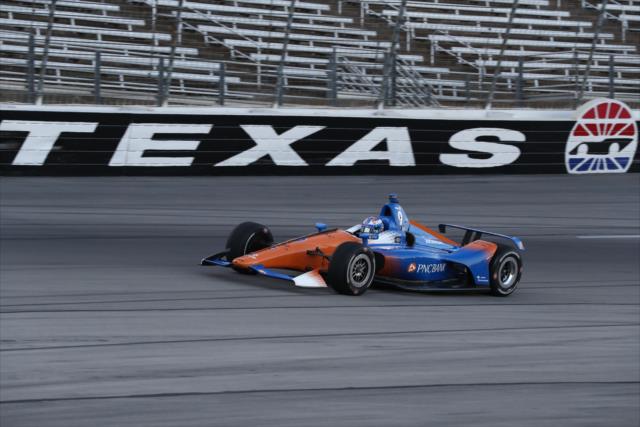
In turn, that makes NASCAR a huge hit for other racing series like IndyCar. The NTT IndyCar Series wants to return but they don’t have the luxury of hosting races without fans. They need the price of gate admissions because they don’t have the TV contract that NASCAR has. They don’t pay tracks for hosting them. So, if no fans can witness IndyCar races in person, what benefit do race tracks have by letting them race?
But, if IndyCar can split a race weekend with NASCAR, then it allows them to race too. NASCAR has that TV money remember and can make up what IndyCar doesn’t bring in terms of revenue. If NASCAR races at Texas in June and IndyCar joins them, the track is already set up, personnel already there and everything staged. IndyCar can race but not cost the track money because the track is getting money from NASCAR’s TV deal.
See where this is going?
Those TV negotiations that were taking place in 2012 and in the early part of 2013, help pave the way eight years later for NASCAR to be a pioneer for all of sports.
The NBA and MLB have worked on plans for resuming but it’s hard for them without fans. Their proposals to get back going sooner rather than later involve playing games without spectators in controlled environments. As an example, the NBA could play games in Las Vegas or Orlando while the MLB could use Spring Training facilities. But, that also involves all players being quarantined for months with each other and away from their families. What incentive is that for the players to leave and go play? At least now, they’re with their families. You can’t tell someone to leave their family for months and have no way of seeing them in between.
NASCAR, well they’re not like stick and ball sports. Their athletes can stay at home with families, take chartered flights to races and have no contact with anyone before returning when the race is over.
NASCAR by virtue of that TV deal is why they can return the soonest. When we have nothing live on TV but NASCAR starting in May, thank the decision makers of that contract eight years ago. That paved the way for NASCAR to lead this charge back to somewhat normal.
 Race Review Online